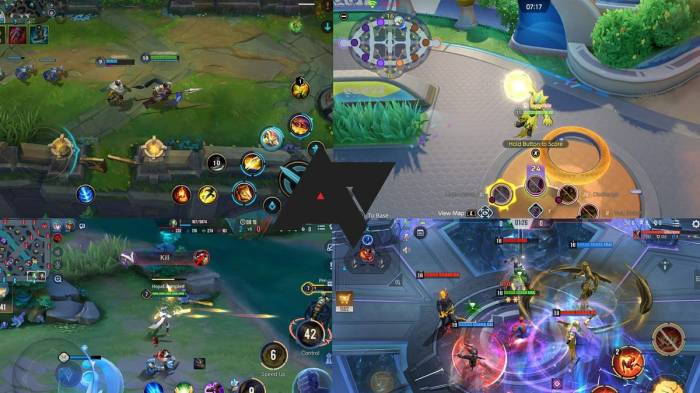
Ever wondered about the captivating world of Multiplayer Online Battle Arenas (MOBAs)? These games, blending strategy, teamwork, and lightning-fast reflexes, have taken the gaming world by storm. From their humble beginnings as custom maps in Warcraft III, MOBAs have evolved into a global phenomenon, boasting millions of players worldwide and spawning countless professional leagues and tournaments. Prepare to delve into the history, mechanics, and enduring appeal of this incredibly popular genre!
We’ll explore the evolution of MOBAs, tracing their lineage from simple custom games to the complex, meticulously balanced titles we see today. We’ll dissect the core gameplay, examining the diverse roles, strategic depth, and the crucial importance of teamwork. Get ready to uncover the secrets behind the success of MOBAs and understand why they continue to captivate players of all skill levels.
Definition and History of MOBAs
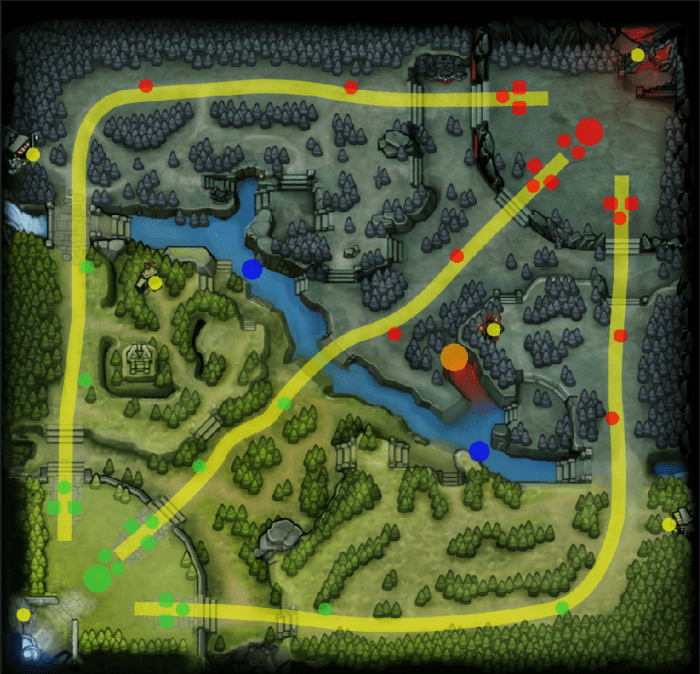
Multiplayer Online Battle Arenas (MOBAs) are a subgenre of real-time strategy (RTS) games characterized by two teams of players controlling powerful characters (“heroes” or “champions”) battling to destroy the opposing team’s base. These battles take place on a map with multiple lanes connecting the bases, punctuated by neutral objectives and strategic points. The core gameplay loop revolves around accumulating resources, improving characters, and coordinating team strategies to achieve victory.MOBAs trace their roots back to the custom maps created within the popular real-time strategy game, Warcraft III: Reign of Chaos.
These custom maps, often featuring player-versus-player combat within a simplified RTS framework, laid the foundation for the genre’s core mechanics and gameplay loop. The community-driven innovation within these custom maps proved incredibly fertile ground, fostering experimentation and refining the core concepts that would later define the MOBA genre.
Evolution from Warcraft III Custom Maps
The earliest influential MOBAs emerged from the Warcraft III modding community. One of the most notable examples is “Defense of the Ancients” (DotA), a custom map created by Eul and later significantly expanded upon by IceFrog. DotA’s popularity skyrocketed, attracting a massive and dedicated player base. Its influence on the genre is undeniable, establishing many of the core conventions that subsequent MOBAs would adopt, including three lanes, a jungle area, creep waves, and the distinct roles of heroes.
The complexity and strategic depth of DotA provided a blueprint for the genre’s future development. Other notable early examples include similar custom maps like “Aeon of Strife” which further cemented the core mechanics of the genre before DotA’s dominance.
Early Influential MOBAs and Their Impact
The success of DotA led to numerous attempts to replicate its formula as a standalone game. League of Legends, released in 2009, is perhaps the most successful example, taking inspiration from DotA while refining and streamlining the gameplay for a broader audience. Its free-to-play model and accessible interface contributed significantly to its global popularity. Other notable early MOBAs include Heroes of Newerth, which aimed to directly compete with League of Legends, and Dota 2, Valve’s official sequel to the original DotA, showcasing improved graphics and features.
These games, each with their unique characteristics, further solidified and expanded the MOBA genre, leading to its widespread recognition and influence on the gaming landscape.
Timeline of Major Milestones in MOBA Development
A chronological overview highlights the key moments in MOBA history:
| Year | Milestone | Description |
|---|---|---|
| 1998 | Aeon of Strife | Early MOBA-like map for StarCraft, considered a foundational precursor to the genre. |
| 2003 | Defense of the Ancients (DotA) | Released as a Warcraft III custom map, establishing the core MOBA gameplay loop. |
| 2009 | League of Legends | Released as a standalone game, achieving massive global popularity. |
| 2013 | Dota 2 | Released by Valve, solidifying the legacy of the original DotA. |
Core Gameplay Mechanics of MOBAs
MOBAs, or Multiplayer Online Battle Arenas, are complex games built on a deceptively simple foundation. At their core, they’re about teamwork, strategy, and outmaneuvering your opponents in a fast-paced, dynamic environment. Understanding the core gameplay loop and the various roles within a team is crucial to mastering these games.
The core gameplay loop typically involves selecting a hero, progressing through the game by accumulating experience and gold, upgrading your hero’s abilities and items, destroying enemy structures, and ultimately, destroying the enemy team’s base. This process unfolds across a map featuring lanes, jungles, and various strategic points. Each action contributes to a constant push and pull, requiring players to adapt their strategies continuously.
Hero Roles and Character Types
MOBAs feature a diverse range of hero roles, each contributing uniquely to the team’s overall strategy. Understanding these roles and how they interact is fundamental to success. Common roles include:
- Tanks: These heroes are designed to absorb damage, protecting their teammates from enemy attacks. They often have high health pools and abilities that disrupt enemies. Think of them as the team’s shield.
- Warriors: Warriors often blend tankiness with significant damage output, acting as both protectors and aggressors. They initiate fights and engage the enemy front line.
- Mages: These heroes deal high magical damage from a distance, often controlling the battlefield with area-of-effect spells. They excel at eliminating enemy heroes quickly.
- Marksmen/Assassins: These heroes specialize in dealing high physical damage, typically from a distance. Marksmen focus on sustained damage over time, while assassins excel at quickly eliminating high-value targets.
- Supports: Supports focus on enhancing their allies’ abilities, healing them, and controlling the battlefield with crowd control abilities. They’re essential for team survival and success.
Teamwork and Strategy in MOBAs
Teamwork and strategic thinking are not merely beneficial in MOBAs; they are absolutely essential. A coordinated team can overcome a team of individually skilled players. Effective strategies involve:
Successful strategies often involve coordinating lane assignments, ganking (ambushing) enemies in other lanes, controlling objectives such as neutral monsters that provide buffs, and managing resource acquisition (gold and experience). Communication is key; successful teams often use voice chat or in-game signals to coordinate actions and anticipate enemy movements. The ability to adapt to changing circumstances, responding effectively to enemy strategies and exploiting their weaknesses, is also crucial.
Gameplay Mechanics Comparison
The following table compares the core gameplay mechanics of three popular MOBAs: League of Legends, Dota 2, and Smite.
| Feature | League of Legends | Dota 2 | Smite |
|---|---|---|---|
| Perspective | Top-down | Top-down | Third-person |
| Map Design | Three lanes, jungle area | Three lanes, jungle area, more complex terrain | Three lanes, jungle area, emphasis on verticality |
| Hero Selection | Large roster of diverse champions | Large roster of diverse heroes | Large roster of diverse gods |
| Gameplay Pace | Generally faster-paced | Generally slower-paced, more strategic depth | Moderately paced, action-oriented |
Closing Notes
So, there you have it – a whirlwind tour of the exciting world of Multiplayer Online Battle Arenas! From their humble origins to their current global dominance, MOBAs have proven their staying power through innovative gameplay, a constant evolution, and a vibrant competitive scene. Whether you’re a seasoned veteran or a curious newcomer, the world of MOBAs offers a thrilling and endlessly rewarding experience.
So grab your friends, pick your hero, and prepare for battle! The lanes await!
Questions Often Asked
What’s the difference between a MOBA and a RTS?
While both involve strategic resource management, MOBAs focus on a smaller-scale battle with pre-defined heroes, while Real-Time Strategy (RTS) games usually involve base building and broader control over units and resources.
How long does a typical MOBA match last?
Match lengths vary, but generally range from 20 to 45 minutes, depending on the game and the skill level of the players.
Are MOBAs difficult to learn?
The learning curve can be steep initially, especially understanding roles and team composition, but most MOBAs have tutorials and resources to help new players get started. The reward of mastering the game is substantial!
What are some popular MOBA titles?
Some of the most popular MOBAs include League of Legends, Dota 2, and Mobile Legends: Bang Bang.


