
Ever dreamt of building a business empire from the ground up, without the risks of real-world failure? Market simulation games offer just that! These engaging titles let you test your entrepreneurial mettle, navigating the complexities of supply and demand, competition, and market trends. From classic PC titles to the latest mobile sensations, the world of market simulation games is diverse and constantly evolving, offering something for every budding tycoon.
This exploration delves into the fascinating world of market simulation games, examining their history, gameplay mechanics, target audiences, and economic principles. We’ll compare them to other game genres, explore the role of technology, and even peek into the future of this captivating niche. Get ready to strategize, innovate, and conquer the virtual marketplace!
Gameplay Mechanics and Features
Market simulation games offer a compelling blend of strategy, resource management, and economic principles, allowing players to build and manage virtual businesses within a competitive environment. These games provide a fascinating sandbox for experimenting with different business strategies and learning about market dynamics in a risk-free setting. The core gameplay loop revolves around making strategic decisions, observing their consequences, and adapting to the ever-changing market conditions.
The engaging aspect of these games lies in their ability to simulate complex economic systems in a simplified, yet informative way. Players are challenged to balance various factors, from production and resource allocation to marketing and competitive strategies, to achieve their business goals. The level of complexity varies greatly between games, catering to both casual and hardcore players. This section delves into the core mechanics and provides a comparison of prominent titles within the genre.
Gameplay Loop Flowchart
The typical gameplay loop in a market simulation game can be represented by the following flowchart:
Imagine a circular flowchart. The starting point is labeled ” Start“. An arrow points from “Start” to ” Resource Acquisition & Production“. From there, another arrow points to ” Marketing & Sales“. A third arrow goes from “Marketing & Sales” to ” Financial Management & Profit Analysis“.
The next arrow points from “Financial Management & Profit Analysis” to ” Market Research & Adaptation“. Finally, an arrow leads from “Market Research & Adaptation” back to ” Resource Acquisition & Production“, completing the loop.
Each stage involves a series of decisions and actions taken by the player, impacting subsequent stages. For example, poor resource management might lead to insufficient production, affecting sales and ultimately, profits. The continuous loop reflects the dynamic and iterative nature of running a business.
Core Mechanics of Market Simulation Games
Several core mechanics consistently define the market simulation genre. These mechanics interrelate and influence each other, creating a complex and engaging gameplay experience. Understanding these core elements is crucial for success in these games.
- Resource Management: Efficiently acquiring, allocating, and utilizing resources (raw materials, labor, capital) is paramount. Players must balance supply and demand, anticipating future needs while managing current constraints.
- Production: This involves transforming raw materials into finished goods or services. Decisions around production capacity, efficiency, and quality directly impact profitability and market share.
- Marketing & Sales: Effectively promoting products and services to target audiences is vital for generating sales. Players must consider pricing strategies, advertising campaigns, and distribution channels.
- Competition: Market simulation games often feature multiple players or AI-controlled competitors vying for market share. Players must develop strategies to outmaneuver opponents and maintain a competitive edge.
- Financial Management: Careful tracking of income, expenses, and investments is crucial for long-term sustainability. Players need to manage cash flow, secure financing, and make sound financial decisions to avoid bankruptcy.
Comparison of Gameplay Mechanics in Three Prominent Market Simulation Games
Comparing different market simulation games highlights the diverse approaches to gameplay mechanics. The following comparison focuses on three popular titles: “Capitalism II,” “Anno 1800,” and “Software Inc.”
- Capitalism II: This game emphasizes a broad, macro-economic perspective. Players manage vast corporations, focusing on production chains, market manipulation, and global trade. Competition is fierce, and strategic long-term planning is crucial. Resource management is highly abstract, focusing on market dynamics rather than detailed resource tracking.
- Anno 1800: This title blends city-building with market simulation. Players manage a growing city, producing goods and trading with other players or AI-controlled factions. Resource management is highly detailed, requiring careful planning of resource extraction, processing, and distribution. Competition is primarily focused on securing resources and controlling trade routes.
- Software Inc.: This game focuses on the software development industry. Players manage a software company, designing, developing, and marketing software products. Resource management centers on human resources (programmers, artists, etc.) and financial capital. Competition involves innovation, pricing strategies, and marketing to secure market share.
Target Audience and Demographics
Market simulation games, while seemingly niche, attract a surprisingly diverse player base. Understanding this audience is crucial for successful game development and marketing. The appeal hinges on a blend of strategic challenge, economic understanding, and the satisfaction of building and managing a virtual empire.The typical player profile isn’t easily confined to a single box. However, certain trends emerge when analyzing the player demographics.
Demographic Profile of Market Simulation Game Players
The following points highlight the key characteristics observed in the typical market simulation game player. This isn’t an exhaustive list, but it provides a good overview of the common traits.
- Age: While players span a wide age range, a significant portion falls within the 25-45 year old bracket. This group often possesses the disposable income and free time necessary to invest in and enjoy more complex games.
- Gender: While traditionally considered a more male-dominated genre, market simulation games are seeing a growing number of female players. The strategic and management aspects appeal to a broad spectrum of genders.
- Education: A higher percentage of players tend to have at least some college education. This suggests a correlation between analytical skills and an enjoyment of the strategic challenges presented by these games.
- Occupation: Players often work in fields requiring analytical thinking or strategic planning, such as business, finance, or engineering. The skills honed in their professions translate well to the game’s mechanics.
- Income: Generally, players tend to fall within the middle to upper-middle class income brackets. This reflects the time commitment and often the financial investment required to purchase and enjoy these games.
Appeal Across Age Groups and Socioeconomic Backgrounds
The appeal of market simulation games transcends simple demographics. Younger players might be drawn to the simpler mechanics and the opportunity to learn about economics in a fun, engaging way. Older players, particularly those with professional experience in business or finance, often find the games intellectually stimulating and a way to apply their expertise in a virtual environment.
The accessibility of different game mechanics, difficulty levels and in-game tutorials also broadens the appeal across different levels of experience and economic backgrounds. For example, a free-to-play game with simple mechanics can attract a broader audience than a more complex, premium-priced title.
Hypothetical Marketing Campaign Targeting Students
Let’s consider a hypothetical marketing campaign for a new market simulation game, “Econopoly,” targeting university students.This campaign will leverage social media platforms like Instagram and TikTok, focusing on short, engaging video ads showcasing the game’s fun and educational aspects. The ads will emphasize the game’s ability to help students understand economic principles in a practical, hands-on way. Influencer marketing, using students with a large following who are studying economics or business, could also be effective.
We could offer in-game rewards or discounts for students who verify their student status. The campaign’s overall tone would be playful and informative, highlighting the game’s accessibility and educational value. This approach contrasts with more traditional marketing methods, focusing on a younger, digitally native audience. A successful example of a similar approach is the marketing strategy employed by games like “Two Point Hospital,” which used humor and relatable scenarios to attract a broader audience.
Economic Principles and Simulations
Market simulation games offer a fascinating blend of entertainment and education, cleverly weaving real-world economic principles into engaging gameplay. These games don’t just present abstract concepts; they allow players to experience the consequences of economic decisions firsthand, fostering a deeper understanding of how markets function. By manipulating variables and observing outcomes, players can grasp complex relationships and develop intuition about economic forces.Economic principles like supply and demand, market equilibrium, and the impact of external shocks are central to the design of these games.
Game mechanics often mirror real-world processes, providing a simplified yet insightful model of economic systems. However, it’s important to acknowledge that these are simplified models, and limitations exist due to the inherent need for abstraction and simplification within a game environment.
Supply and Demand Modeling in Games
Many market simulation games use a simplified model of supply and demand to determine prices. For instance, if the demand for a particular good is high (perhaps due to a successful marketing campaign in-game), and the supply is low (limited resources or production capacity), the price will increase. Conversely, if supply exceeds demand, prices will fall. This dynamic is often visualized through in-game graphs or charts, providing players with a clear representation of market forces.
Games might also include elements of price elasticity – showing how responsive demand is to price changes. For example, a luxury good might have inelastic demand (price changes don’t significantly affect demand), while a basic necessity might have elastic demand (price changes strongly impact demand). These game mechanics allow players to directly observe the impact of their decisions on supply, demand, and ultimately, price.
Market Equilibrium and Game Mechanics
The concept of market equilibrium, where supply and demand intersect to determine a stable price, is often a central theme. Games might simulate this through various mechanics. For example, a player might adjust their production levels based on market prices, aiming to maximize profits by finding the optimal balance between supply and demand. The game’s algorithm then calculates the resulting market price based on the aggregate supply and demand from all players.
If the player produces too much, the price falls; if they produce too little, the price rises. The player learns through trial and error to approach equilibrium. However, it’s crucial to remember that game economies are often simplified and may not fully capture the complexities of real-world market equilibrium, which is constantly shifting and affected by numerous unpredictable factors.
Impact of an In-Game Event: A Technological Advancement
Let’s consider the impact of a technological advancement, such as the invention of a new, more efficient farming technique in an agricultural simulation game. Before the advancement, the cost of producing crops might be relatively high, limiting supply and keeping prices elevated. The new technology reduces production costs significantly, leading to an increase in supply. Assuming demand remains relatively constant, this increased supply would cause market prices to fall.
Players who adopt the new technology early gain a competitive advantage, potentially increasing their market share and profits. Players who are slow to adapt might struggle to compete with the lower prices set by those using the new technology. This mirrors real-world scenarios where technological innovation disrupts markets and forces businesses to adapt or risk obsolescence. The game effectively demonstrates the powerful influence of technological progress on market dynamics.
Comparison with Other Game Genres
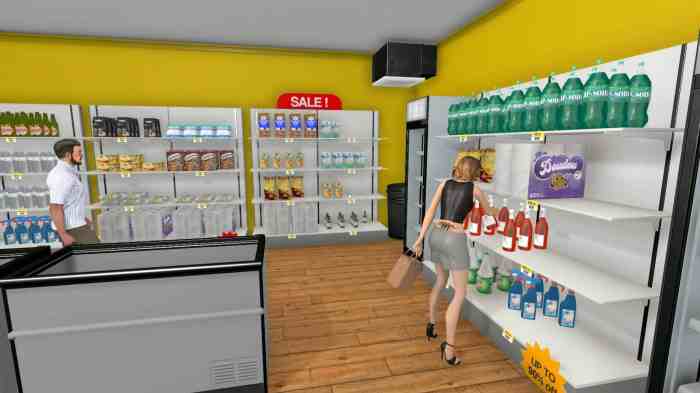
Market simulation games occupy a unique niche in the gaming landscape, differing significantly from action-packed fighting games, strategic business simulations, and the massively multiplayer online worlds of online gaming. Understanding these differences highlights the specific appeal and challenges inherent in the market simulation genre. This section will explore those contrasts, focusing on core mechanics, strategic depth, and social interaction.
Market Simulation vs. Fighting Games: A Gameplay Comparison
The core gameplay loops of market simulation games and fighting games are diametrically opposed. While fighting games emphasize fast-paced reflexes, precise execution of combos, and direct player-versus-player combat, market simulation games prioritize long-term strategic planning, resource management, and indirect competition.
| Feature | Market Simulation | Fighting Game | Comparison |
|---|---|---|---|
| Primary Goal | Maximize profits, market share, or other economic objectives | Defeat opponent(s) | Focus shifts from direct confrontation to indirect economic competition. |
| Gameplay Pace | Slow, deliberate, turn-based or real-time with extended periods of planning | Fast-paced, real-time, immediate action | Significant difference in tempo and required player engagement. |
| Player Skill | Strategic thinking, resource management, market analysis | Reflexes, hand-eye coordination, execution of complex combos | Emphasizes different cognitive and motor skills. |
| Winning Condition | Achieving predefined economic goals (e.g., highest market share, largest profit) | Reducing opponent’s health to zero | Victory is defined by economic success rather than direct combat. |
Strategic Depth: Market Simulations vs. Business Games
Both market simulation and dedicated business games focus on strategic decision-making, but they differ in scope and complexity. Market simulation games often simplify economic models to maintain accessibility, focusing on core principles like supply and demand, while business games can delve into intricate financial modeling, human resource management, and complex market dynamics. For example, a market simulation might focus on pricing strategies and production optimization, while a business game might incorporate elements like employee morale, research and development, and legal compliance.
The level of detail and the range of strategic options available vary significantly between these two genres.
Social Interaction: Market Simulations and Online Gaming Communities
Market simulation games can incorporate social elements, but the nature of this interaction differs from typical online gaming experiences. While massively multiplayer online role-playing games (MMORPGs) often feature collaborative quests, raids, and player-versus-player combat, market simulation games’ social aspects might involve forming alliances, trading resources, or engaging in competitive market maneuvers. The focus is often less on direct player interaction and more on indirect competition within a shared economic environment.
Think of the collaborative and competitive aspects of a stock market simulator, where players might cooperate on certain ventures but ultimately compete for the highest returns. This contrasts with the direct player-versus-player interactions found in many online shooters or strategy games.
The Role of Technology and Innovation
Technological advancements have profoundly shaped the market simulation game genre, impacting both its development and widespread appeal. From the rudimentary text-based adventures of the past to the visually stunning and intricately detailed simulations of today, the evolution reflects a constant push for enhanced realism and player engagement. This progress is driven not only by improved graphics and online capabilities but also by the integration of sophisticated artificial intelligence and machine learning algorithms.The rise of powerful gaming hardware has allowed developers to create incredibly detailed and immersive market simulations.
High-resolution graphics, realistic 3D modeling, and advanced physics engines contribute to a more believable and engaging experience. This visual fidelity, combined with improved sound design and intuitive user interfaces, significantly enhances player immersion and enjoyment, ultimately driving the genre’s popularity. The advent of online multiplayer functionality has further revolutionized the experience, allowing players to compete, collaborate, and interact within dynamic virtual economies in real-time, fostering a sense of community and competition unseen in earlier iterations.
Improved Graphics and Online Multiplayer’s Impact
The impact of improved graphics and online multiplayer capabilities on market simulation games is undeniable. Consider the shift from simple spreadsheets representing market data to dynamic 3D visualizations of bustling cities, complex supply chains, and fluctuating market trends. This visual representation makes complex economic concepts more accessible and engaging for a wider audience. Furthermore, the introduction of online multiplayer features transforms the solitary experience of many earlier simulations into a vibrant social landscape.
Players can now engage in strategic alliances, cutthroat competition, and collaborative projects within a shared virtual economy, creating a far richer and more replayable experience. The success of games like “Anno 1800” and “Cities: Skylines,” which heavily feature online multiplayer elements, stands as a testament to this impact.
Artificial Intelligence and Machine Learning in Market Simulations
Artificial intelligence (AI) and machine learning (ML) are increasingly crucial in generating realistic and dynamic market simulations. AI-driven opponents can adapt their strategies based on player actions, creating unpredictable and challenging gameplay. ML algorithms can analyze vast datasets of economic indicators and player behavior to generate realistic market fluctuations and unpredictable events, such as economic crises or technological breakthroughs.
This dynamic environment makes each playthrough unique and prevents the game from becoming predictable. For example, an AI-controlled competitor might react to a player’s aggressive expansion by strategically lowering prices or investing in research and development to gain a competitive edge.
Future Technological Innovations in Market Simulation Games
The future of market simulation games holds exciting possibilities. Several technological advancements could significantly enhance the genre:
Several technological advancements could revolutionize market simulation games. These include:
- Enhanced AI and Procedural Generation: More sophisticated AI could create truly unpredictable and emergent gameplay, with AI-controlled entities exhibiting complex behaviors and reacting dynamically to player actions. Procedural generation could create unique and ever-changing game worlds, preventing repetitive playthroughs. Imagine a simulation where entire industries and market structures organically evolve based on player choices and unforeseen events, mirroring the unpredictable nature of real-world economies.
- Virtual Reality (VR) and Augmented Reality (AR) Integration: VR and AR could immerse players in the virtual world of the market simulation, allowing for more intuitive interaction and a deeper sense of presence. Imagine experiencing the thrill of a stock market crash or the satisfaction of building a successful business empire from a first-person perspective.
- Integration with Real-World Data: Linking market simulations to real-time economic data could create highly realistic and predictive models. Players could test their strategies against actual market conditions, gaining valuable insights into economic principles and forecasting techniques. This could lead to a more educational and engaging experience, blurring the lines between game and learning tool.
Ultimate Conclusion
From humble beginnings to the sophisticated simulations we see today, market simulation games have consistently captured the imaginations of players worldwide. Their ability to blend engaging gameplay with real-world economic principles makes them both entertaining and educational. As technology continues to advance, the future of this genre looks brighter than ever, promising even more realistic, immersive, and challenging experiences for players of all skill levels.
So, are you ready to build your digital empire?
Detailed FAQs
What platforms are market simulation games available on?
Market simulation games span a wide range of platforms, including PC, Mac, mobile (iOS and Android), and various game consoles (like PlayStation, Xbox, and Nintendo Switch).
Are market simulation games only for adults?
No, while some games have more complex mechanics suitable for older audiences, there are many market simulation games designed for various age groups, offering simplified gameplay and educational elements for younger players.
How realistic are the economic models in these games?
The realism varies greatly depending on the game. Some strive for accurate simulations of real-world economic principles, while others prioritize fun and engaging gameplay, even if it means simplifying or altering certain economic aspects.
Can I play market simulation games with friends?
Many modern market simulation games offer online multiplayer modes, allowing you to compete or cooperate with friends in building your virtual businesses. Some also offer local multiplayer options.


