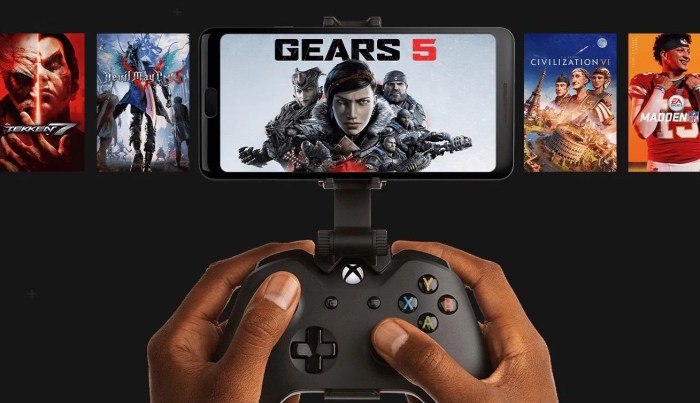
Ever dreamed of playing AAA games on your phone, anywhere, anytime? Cloud gaming is making that dream a reality! Forget bulky consoles and high-powered PCs – with cloud gaming, all the processing happens on remote servers, streamed directly to your device. It’s like Netflix, but for video games. But is this futuristic technology all it’s cracked up to be?
Let’s dive into the exciting world of cloud gaming services and explore its potential, pitfalls, and everything in between.
From the titans of the industry like Xbox Cloud Gaming and GeForce Now, to the rising stars vying for a slice of the market, the cloud gaming landscape is dynamic and ever-evolving. We’ll examine the different business models, technological underpinnings, and the impact on various game genres – from fast-paced fighting games to intricate business simulations. We’ll also look ahead to the future, exploring how advancements like 5G and VR will shape the next generation of gaming.
Defining Cloud Gaming Services
Cloud gaming, also known as game streaming, represents a revolutionary shift in how we access and play video games. Instead of relying on powerful local hardware like gaming PCs or consoles, cloud gaming leverages the processing power and storage of remote servers to stream games directly to your device. This allows you to play high-fidelity games on a wide range of devices, from smartphones and tablets to low-powered laptops, all without the need for expensive, high-spec hardware.Cloud gaming services function by transmitting video, audio, and control data between the player’s device and powerful servers in a data center.
The server renders the game, compresses the visual output, and sends it to the player’s device. Simultaneously, the player’s input commands are sent back to the server to control the game’s actions. This entire process happens with minimal latency, aiming for a seamless and responsive gaming experience.
Technological Infrastructure for Cloud Gaming
Effective cloud gaming requires a sophisticated and robust technological infrastructure. This includes powerful servers equipped with high-end graphics processing units (GPUs) and central processing units (CPUs) to handle the demanding computations required for rendering games at high resolutions and frame rates. High-speed, low-latency network connections are crucial for minimizing lag and ensuring smooth gameplay. A distributed network of data centers, strategically located across the globe, is necessary to reduce latency for players in different regions.
Content Delivery Networks (CDNs) play a vital role in efficiently delivering game data to players, reducing download times and improving overall performance. Finally, robust security measures are implemented to protect game data and prevent unauthorized access. The entire system operates with high levels of redundancy to ensure minimal downtime and maintain a consistent gaming experience.
Comparison of Cloud Gaming and Traditional Gaming
Traditional console and PC gaming rely on local hardware to render games. This means players need to invest in powerful, often expensive, PCs or consoles to play the latest titles at high settings. In contrast, cloud gaming offloads the processing burden to remote servers, allowing players to enjoy high-fidelity games on less powerful devices. Traditional gaming offers complete control over settings and hardware, and offline play is usually possible.
Cloud gaming, however, is entirely dependent on a stable internet connection, and features like offline play are generally unavailable. The cost structure also differs; traditional gaming requires a significant upfront investment in hardware, while cloud gaming typically involves a subscription fee.
Benefits and Drawbacks of Cloud Gaming Services
The following table summarizes the key advantages and disadvantages of cloud gaming services:
| Benefits | Drawbacks |
|---|---|
| Accessibility: Play high-end games on a wide range of devices. | Internet Dependency: Requires a stable, high-speed internet connection. |
| Affordability: Lower upfront cost compared to purchasing powerful hardware. | Latency: Potential for lag and input delay, impacting gameplay. |
| Convenience: No need for hardware upgrades or maintenance. | Limited Control: Less control over game settings and hardware configurations. |
| Instant Access: Start playing games immediately without lengthy downloads. | Subscription Fees: Ongoing subscription costs are necessary. |
Market Overview of Cloud Gaming
The cloud gaming market is experiencing explosive growth, transforming how we access and play video games. No longer tethered to powerful, expensive hardware, players can now enjoy high-fidelity gaming experiences across a range of devices, from smartphones and tablets to laptops and smart TVs. This shift has attracted significant investment and competition, resulting in a dynamic and rapidly evolving landscape.The major players are vying for dominance using diverse strategies, from subscription-based services to individual game purchases.
Understanding their business models and market positions is crucial to grasping the current state and future potential of this exciting industry.
Major Players and Market Share
The cloud gaming market is dominated by a few key players, each with its own strengths and weaknesses. Precise market share figures fluctuate constantly, but a general picture can be painted. Nvidia GeForce Now, boasting a substantial library of games and a wide range of supported devices, holds a significant share. Google Stadia, despite its discontinuation of the Stadia Games and Services platform, left a mark and its technology continues to be used in other products.
Xbox Cloud Gaming, integrated with the Xbox ecosystem, benefits from Microsoft’s extensive game portfolio and established user base, commanding a considerable portion of the market. Amazon Luna, PlayStation Plus Premium cloud gaming, and other smaller players also contribute to the overall market. It’s important to note that these shares are constantly in flux due to the competitive nature of the market and the introduction of new services.
Gathering precise, up-to-the-minute data requires consulting specialized market research firms.
Business Models in Cloud Gaming
Cloud gaming providers utilize a variety of business models to generate revenue and attract users. The most common models include subscription services, where users pay a recurring fee for access to a library of games; pay-per-game models, where users purchase individual games; and hybrid models, combining aspects of both. Some services also offer free tiers with limited functionality or access to a smaller game selection.
The choice of business model significantly impacts the user experience and the provider’s profitability. For example, a subscription model encourages consistent user engagement, while a pay-per-game model provides more flexibility but may lead to less predictable revenue streams.
Growth Trajectory of the Cloud Gaming Market (2018-2023)
Imagine a graph with years (2018-2023) on the horizontal axis and market size (in billions of dollars, for example) on the vertical axis. The line representing market growth would start relatively low in 2018, reflecting the nascent stage of the industry. From 2019 onwards, the line would show a significant upward trend, accelerating in the subsequent years. The growth isn’t perfectly linear; there might be slight dips or plateaus reflecting specific market events or economic fluctuations.
However, the overall trajectory is undeniably positive, illustrating a substantial increase in market size over the five-year period. This growth is driven by factors such as increasing internet speeds, improved mobile device capabilities, and the rising popularity of gaming overall. While precise figures require reference to market research reports, the visual representation would clearly show a substantial increase in market value, demonstrating the rapid expansion of the cloud gaming sector.
This growth reflects the increasing adoption of cloud gaming by both casual and hardcore gamers. For example, the increase in the number of subscribers to services like Xbox Cloud Gaming or GeForce Now over the past five years provides evidence of this expansion.
Game Genres and Cloud Gaming
Cloud gaming’s success hinges on its ability to deliver a smooth, responsive experience across a wide range of game genres. However, not all genres are created equal when it comes to cloud gaming’s inherent limitations, primarily latency. The responsiveness of the game, directly impacted by latency, significantly affects the player experience, making some genres better suited than others.
Latency Sensitivity in Different Game Genres
Latency, the delay between input and output, is the critical factor determining a game’s suitability for cloud gaming. Genres requiring precise, real-time reactions, such as fighting games and competitive online shooters, are significantly more sensitive to latency than genres where a slight delay is less impactful, like turn-based strategy games or single-player adventures. High latency can lead to frustrating gameplay experiences, making quick reflexes feel sluggish and precise movements imprecise.
Conversely, genres less reliant on immediate feedback are more forgiving of higher latency.
Performance Comparison Across Cloud Gaming Platforms
The performance of games across different cloud gaming platforms varies depending on factors like server infrastructure, network conditions, and compression technology. While most platforms strive for low latency, differences exist. Generally, platforms with robust server networks and advanced compression techniques tend to offer a smoother experience for latency-sensitive games. Fighting games, for example, often demand the lowest possible latency for competitive play.
Business simulation games, however, are less affected by minor latency increases. Online multiplayer games fall somewhere in between, with the impact of latency varying based on the specific game mechanics. For example, a real-time strategy game might be more sensitive to latency than a massively multiplayer online role-playing game (MMORPG) where responsiveness is less critical in certain aspects.
Examples of Games Available on Cloud Gaming Services
The following examples showcase the variety of genres available on cloud gaming platforms, highlighting their differing latency sensitivities:
Fighting Games: These games demand extremely low latency for optimal gameplay. A noticeable delay can be the difference between victory and defeat.
- Mortal Kombat 11
- Street Fighter V
- Tekken 7
Business/Strategy Games: These games are generally less sensitive to latency. While a delay might be noticeable, it rarely impacts the core gameplay experience as significantly as in fighting games.
- Civilization VI
- Tropico 6
- Anno 1800
Online Multiplayer Games: The latency sensitivity in this genre varies greatly depending on the specific game. First-person shooters (FPS) and real-time strategy (RTS) games are much more sensitive to latency than MMORPGs.
- Fortnite
- Call of Duty: Warzone
- World of Warcraft
Bandwidth Requirements for Streaming Different Game Genres
The bandwidth required for streaming games varies depending on the game’s graphical fidelity and the chosen streaming resolution and quality settings. Higher resolutions and more detailed graphics naturally demand more bandwidth.
| Game Genre | Minimum Bandwidth (Mbps) | Recommended Bandwidth (Mbps) |
|---|---|---|
| Fighting Games (High Settings) | 25 | 50 |
| Business/Strategy Games (High Settings) | 15 | 30 |
| Online Multiplayer Games (High Settings) | 20 | 40 |
Technological Aspects of Cloud Gaming
Cloud gaming, while seemingly simple from a user perspective, relies on a complex interplay of technologies working seamlessly together. The performance, responsiveness, and overall experience are directly tied to the robustness and efficiency of these underlying systems. Let’s delve into the crucial technological components that make cloud gaming possible.
Server Infrastructure’s Role in Performance
The server infrastructure forms the backbone of any cloud gaming service. Powerful servers, equipped with high-end GPUs and CPUs, are responsible for rendering the game visuals, processing player input, and managing game logic. The number and capacity of these servers directly impact the number of concurrent players a service can support and the quality of the gaming experience.
A well-designed infrastructure utilizes load balancing to distribute the workload evenly, preventing bottlenecks and ensuring consistent performance even during peak usage times. For example, a service like Google Stadia relies on a vast network of data centers strategically located globally to minimize latency and provide consistent performance for users worldwide. The choice of server hardware (e.g., the specific GPU model) significantly affects the graphical fidelity and frame rate achievable.
Higher-end hardware allows for the streaming of higher-resolution visuals and smoother gameplay.
Network Latency and Bandwidth’s Impact on Gameplay
Network latency, the delay between sending a command and receiving a response, is a critical factor influencing the responsiveness of cloud gaming. High latency leads to noticeable input lag, making the game feel sluggish and unresponsive. This is particularly problematic in fast-paced games requiring precise timing and reflexes. Similarly, bandwidth, the amount of data transmitted per unit of time, dictates the quality of the streamed video.
Insufficient bandwidth results in lower resolutions, reduced frame rates, and potentially noticeable compression artifacts, severely impacting the visual fidelity and overall enjoyment of the game. A minimum upload and download speed is crucial for a smooth experience; for example, a stable connection of at least 25 Mbps download and 10 Mbps upload is often recommended, though higher speeds are always preferable for higher quality streaming.
Compression and Streaming Technologies
Efficient compression and streaming technologies are essential for delivering high-quality game visuals while minimizing bandwidth consumption. Various compression algorithms are used to reduce the size of the video stream without sacrificing too much visual detail. Adaptive bitrate streaming dynamically adjusts the quality of the stream based on available bandwidth, ensuring a consistent experience even with fluctuating network conditions.
Techniques like HEVC (High-Efficiency Video Coding) and VP9 are commonly employed for efficient video compression, allowing for higher resolutions and frame rates within a given bandwidth. The specific implementation of these technologies varies across different cloud gaming services, influencing the overall visual quality and performance. For instance, some services may prioritize lower latency over higher visual fidelity, while others may focus on maximizing visual quality even at the cost of slightly increased latency.
Client-Side Hardware’s Influence on the Experience
While the server handles the bulk of the processing, client-side hardware still plays a significant role in the cloud gaming experience. A powerful CPU and sufficient RAM are important for handling the decoding of the streamed video and processing user input. While the game itself is rendered on the server, the client still needs sufficient processing power to handle the received data smoothly.
A high-quality display with low latency will enhance the overall visual experience. A less powerful device may struggle to maintain a consistent frame rate, even if the server is providing a high-quality stream. For instance, older devices with limited processing power might experience lag or visual glitches, even with a high-speed internet connection, while newer, more powerful devices will generally have a smoother, more responsive experience.
Future Trends in Cloud Gaming
Cloud gaming is poised for explosive growth, and its future is brimming with exciting possibilities. Technological advancements, shifting consumer preferences, and innovative business models are all converging to shape the next generation of interactive entertainment. We’ll explore some of the key trends that are likely to define the landscape of cloud gaming in the years to come.
Technological Advancements in Cloud Gaming
The ongoing evolution of cloud computing infrastructure is a cornerstone of cloud gaming’s future. We can expect to see significant improvements in server-side processing power, leading to higher fidelity graphics, smoother gameplay, and the ability to render increasingly complex game worlds. This includes advancements in data compression techniques, allowing for faster streaming and reduced latency, even on lower bandwidth connections.
Furthermore, the development of more sophisticated AI for game optimization and predictive rendering will enhance the overall player experience. For example, Nvidia’s advancements in GPU technology and Google’s Stadia’s ongoing refinements to its streaming infrastructure exemplify this ongoing progress. The focus is on creating a seamless and responsive experience, indistinguishable from local gaming.
The Impact of 5G and Other Advancements on Accessibility
The rollout of 5G networks represents a game-changer for cloud gaming. 5G’s significantly higher bandwidth and lower latency compared to 4G will dramatically improve the quality and accessibility of cloud gaming services. This means smoother gameplay, reduced input lag, and the ability to stream high-fidelity games even in areas with previously unreliable internet connectivity. Beyond 5G, advancements in Wi-Fi 6E and other wireless technologies will further contribute to a more ubiquitous and reliable cloud gaming experience.
Imagine playing graphically demanding AAA titles on your phone in a park, without noticeable lag – 5G is making this a reality.
Cloud Gaming Integration with VR and AR
The convergence of cloud gaming with virtual and augmented reality technologies holds immense potential. Cloud gaming’s ability to offload demanding rendering tasks to powerful servers makes it ideally suited for powering high-fidelity VR and AR experiences. Imagine playing a VR game with photorealistic graphics and complex physics, all streamed seamlessly to your VR headset without the need for expensive local hardware.
Similarly, AR applications could be enhanced with cloud-rendered environments and characters, overlaying realistic game elements onto the real world. Companies like Microsoft with their Azure cloud platform are actively investing in this convergence, paving the way for immersive and interactive experiences.
Future Business Models for Cloud Gaming Services
The business models for cloud gaming are evolving beyond simple subscription services. We can expect to see a diversification of revenue streams, including: more sophisticated tiered subscription models offering varying levels of access and features, in-game purchases and microtransactions, advertising integration within games, and partnerships with hardware manufacturers for bundled offerings. For instance, some services might offer a free tier with limited access, while premium tiers unlock high-resolution streaming and access to a larger game library.
This approach offers flexibility and caters to a broader range of consumer preferences and budgets.
Fighting Games in Cloud Gaming
The rise of cloud gaming has opened up exciting new possibilities for gamers, but for fighting game enthusiasts, the transition hasn’t been entirely smooth. The precision and responsiveness demanded by fighting games present unique challenges for a technology that relies on streaming data over the internet. Let’s delve into the specifics of this fascinating intersection.
Input Lag and Competitive Viability
Input lag, the delay between performing an action and seeing it reflected on screen, is the biggest hurdle for fighting games in the cloud. Even a small amount of lag can significantly impact a player’s ability to execute complex combos, react to an opponent’s moves, and ultimately, win. In competitive fighting games, where milliseconds can determine victory or defeat, even a consistent 20ms of lag can be the difference between a perfectly timed parry and a devastating counter-hit.
This makes cloud gaming a less-than-ideal platform for serious competitive play, at least for now. The experience is drastically different from the near-instantaneous response offered by local play on a dedicated console. High-level players, accustomed to razor-sharp precision, often find the inherent lag unacceptable for serious competition.
Cloud Gaming vs. Dedicated Consoles: A Comparative Experience
Playing fighting games on a dedicated console provides a level of responsiveness and precision that cloud gaming currently struggles to match. The direct connection between the controller and the game console minimizes latency, resulting in a fluid and responsive experience. In contrast, cloud gaming introduces additional steps – data transmission to and from the server, processing on the server, and data transmission back to the player’s device.
Each step adds to the overall latency. While some cloud gaming services are working to minimize this lag, it remains a significant difference between the two platforms. The visual quality can be comparable, but the feel of the game is distinctly different due to this input lag.
Factors Contributing to a Positive Cloud Gaming Fighting Game Experience
Despite the challenges, several factors can contribute to a more enjoyable experience when playing fighting games via cloud gaming. A strong and stable internet connection with low latency is paramount. Choosing games that are less reliant on precise, frame-perfect inputs can also help mitigate the impact of lag. Furthermore, the convenience of accessing a large library of games without the need for expensive hardware can be a major draw for casual players.
Finally, the constant improvement in cloud gaming technology, particularly in reducing latency, offers hope for a future where the gap between cloud and local play is significantly narrowed.
Business Games in Cloud Gaming
The rise of cloud gaming has opened exciting new possibilities for business simulation games, impacting accessibility, multiplayer experiences, and overall gameplay. These simulations, often complex and demanding on hardware, find a natural home in the cloud’s scalable infrastructure, but also face unique challenges. Let’s delve into the advantages and disadvantages of this emerging synergy.Advantages and Disadvantages of Cloud-Based Business SimulationsCloud gaming offers several key benefits for business simulations.
The most significant is the removal of hardware limitations. Players no longer need powerful PCs to run resource-intensive simulations; a modest internet connection and a compatible device are sufficient. This democratizes access to sophisticated simulations, opening them up to a broader audience. However, a consistent and high-speed internet connection is crucial for a smooth experience, and latency can still be a factor, affecting real-time decision-making in some games.
Furthermore, reliance on a stable internet connection introduces a vulnerability; outages can disrupt gameplay and potentially lead to lost progress. Data security is another consideration; sensitive player data needs to be protected.
Accessibility of Complex Business Simulations
Cloud gaming dramatically improves accessibility for complex business simulations. These games, often featuring intricate economic models and numerous variables, previously required high-end PCs to run smoothly. The cloud removes this barrier, allowing players with lower-end devices or limited budgets to experience these simulations. This increased accessibility fosters a larger player base, encouraging developers to create more ambitious and complex simulations knowing a wider audience can play.
For example, a game like “Capitalism Lab,” known for its detailed economic modeling, could reach a significantly larger player base thanks to cloud gaming’s reduced hardware requirements.
Comparison of Cloud and Traditional Business Game Experiences
Playing business simulations in the cloud offers a different experience compared to traditional PC versions. While the core gameplay remains the same, the cloud introduces several nuances. Graphics quality can vary depending on the cloud provider’s infrastructure and the player’s internet connection. Loading times are generally faster on the cloud, as the game’s processing happens on powerful remote servers.
However, the reliance on an internet connection can introduce latency, potentially impacting real-time decision-making in competitive multiplayer scenarios. The overall experience is generally smoother and more consistent across different devices, unlike traditional PC versions where performance can vary greatly based on individual hardware configurations.
Enhancing Multiplayer Aspects of Business Simulations
Cloud gaming significantly enhances the multiplayer aspects of business simulations. The scalability of cloud infrastructure allows for larger and more complex multiplayer games with many simultaneous players interacting within a shared economic environment. This facilitates more realistic simulations of market dynamics, where players’ actions directly influence the overall game economy. For instance, imagine a global trade simulation where hundreds of players compete simultaneously, managing their own companies and interacting within a realistically simulated market; this becomes feasible and efficient through the power of cloud computing.
Furthermore, cross-platform play becomes much easier to implement, allowing players on different devices to compete against each other seamlessly.
Online Gaming and Cloud Gaming
Cloud gaming is revolutionizing the way we experience online multiplayer games, significantly impacting accessibility, prevalence, and the overall social dynamics of online gaming communities. Its ability to stream high-quality games to a wide range of devices is reshaping the landscape of interactive entertainment.Cloud gaming enhances the accessibility of online multiplayer games by eliminating many of the traditional barriers to entry.
No longer is a powerful, expensive gaming PC or console required to participate in high-end online experiences. Players with less powerful devices, such as smartphones or tablets, can now access and enjoy the same games as those with top-of-the-line hardware. This democratizing effect opens online multiplayer gaming to a vastly larger audience, irrespective of their geographical location or economic status.
This expanded reach leads to more diverse and inclusive online communities.
Cloud Gaming’s Impact on Online Gaming Prevalence
The impact of cloud gaming on the prevalence of online gaming is substantial and multifaceted. By lowering the barrier to entry, cloud gaming has fueled significant growth in the number of online gamers. This is particularly noticeable in regions with limited access to high-performance hardware, where cloud gaming provides a viable alternative. The convenience and ease of access offered by cloud gaming platforms also attract casual gamers who may not have previously considered investing in dedicated gaming equipment.
This broadening of the player base contributes to a more dynamic and competitive online gaming market. The increasing availability of subscription-based cloud gaming services further contributes to this growth by offering affordable access to a wide library of games. For example, the rise of services like Xbox Cloud Gaming and GeForce Now has made online gaming more accessible to a broader audience, resulting in a noticeable increase in the number of active online gamers.
Social Aspects of Online Gaming: Cloud vs. Traditional Platforms
While the core social aspects of online gaming remain largely consistent across cloud and traditional platforms – teamwork, competition, communication – cloud gaming introduces some subtle yet significant differences. The ease of access offered by cloud gaming may lead to more spontaneous and casual interactions between players. The ability to jump into a game quickly from any device promotes a more flexible and less structured social experience.
However, traditional platforms often foster stronger community bonds due to the greater investment required from players (hardware, software, and time). Dedicated gaming communities often form around specific platforms, fostering a sense of belonging and shared experience that may be less pronounced in the more diverse and transient environment of cloud gaming. For example, the dedicated player bases found around titles on Steam or PlayStation Network often demonstrate a stronger sense of community than those seen on more general cloud gaming platforms.
Future Developments in Online Gaming Facilitated by Cloud Technology
Cloud technology holds immense potential for future advancements in online gaming. The scalability of cloud infrastructure allows for the creation of massively multiplayer online games (MMOs) with unprecedented player counts and persistent worlds of unparalleled complexity. Furthermore, cloud gaming can facilitate the development of cross-platform play, allowing players on different devices and operating systems to seamlessly interact within the same online environment.
Advancements in AI and machine learning, powered by cloud computing, could also lead to more dynamic and responsive game worlds, adaptive difficulty levels, and personalized gaming experiences tailored to individual player preferences. For instance, imagine a future where AI-driven opponents adapt their strategies in real-time based on your playing style, creating a constantly evolving and challenging gaming experience.
Final Review
Cloud gaming is more than just a technological advancement; it’s a paradigm shift in how we access and experience video games. While challenges remain, particularly concerning latency and bandwidth, the potential benefits are undeniable – increased accessibility, affordability, and a future where the limitations of your hardware are a thing of the past. As technology continues to evolve, cloud gaming is poised to redefine the gaming landscape, offering a more inclusive and exciting experience for players worldwide.
So, grab your controller (or your phone!), and get ready for the future of gaming – it’s in the cloud!
Common Queries
What internet speed do I need for cloud gaming?
A stable, high-speed internet connection is crucial. Aim for at least 25 Mbps for a decent experience, but faster speeds (50 Mbps or more) are recommended for higher resolutions and smoother gameplay.
Is cloud gaming expensive?
Pricing varies widely depending on the service and subscription level. Some offer free tiers with limitations, while others have monthly subscription fees. Compare options to find what fits your budget and gaming habits.
Will cloud gaming replace traditional gaming?
It’s unlikely to completely replace traditional gaming. Cloud gaming offers unique advantages in accessibility and convenience, but dedicated consoles and PCs still offer superior control and performance for certain gamers and game types.
Can I play any game on cloud gaming services?
No, each service has its own library of games. The selection varies considerably, so check the available titles before subscribing.


