
Step into the world of Augmented Reality (AR) games, where reality and fantasy merge to create immersive gaming adventures like never before. From enhancing gameplay to shaping the future of online gaming, AR games are taking the industry by storm.
In this captivating exploration, we dive deep into the development, examples, and impact of AR games, comparing them to virtual reality games and analyzing their potential in fighting and business genres. Get ready to level up your gaming experience with AR technology!
Introduction to Augmented Reality (AR) Games
Augmented Reality (AR) is a technology that overlays digital information or virtual objects onto the real-world environment using a smartphone, tablet, or AR glasses. In the gaming industry, AR games have gained popularity for their unique ability to merge the virtual and physical worlds seamlessly.AR enhances the gaming experience by allowing players to interact with the game in a more immersive way.
Players can see virtual characters or objects overlaid on their physical surroundings, creating a dynamic and engaging gameplay experience. This technology bridges the gap between the digital and physical worlds, providing a new dimension to traditional gaming.
How AR Enhances the Gaming Experience
- Immersive Gameplay: AR games allow players to experience the game in a real-world setting, enhancing the overall immersion and engagement.
- Interactive Elements: Players can interact with virtual objects and characters overlaid on their physical environment, creating a more dynamic gameplay experience.
- Social Interaction: AR games often incorporate multiplayer features, encouraging social interaction and collaboration among players in the real world.
- Physical Activity: Some AR games require players to move around and explore their surroundings, promoting physical activity and a healthy gaming experience.
Popularity of AR Games in the Gaming Industry
- Pokémon GO: One of the most popular AR games, Pokémon GO, has millions of players worldwide who explore their neighborhoods to catch virtual Pokémon.
- ARKit and ARCore: With the introduction of AR development platforms like ARKit for iOS and ARCore for Android, more developers are creating AR games, leading to an increase in the popularity of AR gaming.
- Market Growth: The AR gaming market is expected to grow significantly in the coming years, with more players and developers embracing this innovative technology.
Development of Augmented Reality (AR) Games
Augmented Reality (AR) games have gained popularity due to their immersive and interactive nature. The process of creating AR games involves a unique blend of technology, creativity, and innovation. Developers utilize various tools and software to bring these games to life, incorporating real-world elements into the virtual gaming experience.
Technology Used in Developing AR Games
AR games rely on advanced technologies such as computer vision, depth tracking, and geolocation services to merge virtual objects with the physical environment. Developers often use AR development platforms like Unity 3D, ARKit, and ARCore to create realistic and engaging gaming experiences. These tools allow for the integration of 3D models, animations, and interactive elements into the real world through a smartphone or AR headset.
- Computer Vision: AR games use computer vision algorithms to recognize and track real-world objects, enabling virtual objects to interact seamlessly with the environment.
- Depth Tracking: Depth-sensing cameras or sensors are used to measure the distance between objects in the physical space, enhancing the realism of AR experiences.
- Geolocation Services: AR games utilize GPS and geolocation data to place virtual elements in specific locations, creating location-based gameplay and augmented reality quests.
Challenges of Developing AR Games versus Traditional Games
Developing AR games presents unique challenges compared to traditional games, primarily due to the integration of real-world elements and the reliance on cutting-edge technologies.
- Hardware Limitations: AR games require powerful devices capable of running complex algorithms and rendering 3D graphics in real-time, posing challenges for developers in optimizing performance across various devices.
- User Interaction: Designing intuitive and user-friendly interactions in AR games can be challenging, as players must navigate both the virtual and physical worlds simultaneously.
- Environmental Factors: AR games are heavily influenced by the surrounding environment, such as lighting conditions, obstacles, and spatial constraints, which can impact gameplay and user experience.
- Data Privacy and Security: Collecting and processing real-world data in AR games raise concerns about user privacy and data security, requiring developers to implement robust measures to protect user information.
Examples of Popular Augmented Reality (AR) Games
Augmented Reality (AR) games have gained immense popularity in recent years, with some games becoming household names and revolutionizing the gaming industry. Let’s take a look at some of the most well-known AR games and analyze their success factors.
Pokemon Go
Pokemon Go took the world by storm when it was released in 2016. Players could explore the real world to find and catch virtual Pokemon through their smartphones. The game’s success can be attributed to its nostalgia factor, as it appealed to fans of the original Pokemon series. The social aspect of the game, where players could team up to battle in gyms and go on raids, also contributed to its popularity.
Ingress
Ingress, developed by the same company behind Pokemon Go, was one of the first AR games to gain a dedicated following. Players join one of two factions and compete to control virtual portals located at real-world landmarks. The game’s strategic gameplay and emphasis on teamwork attracted a loyal fan base.
Harry Potter: Wizards Unite
Harry Potter: Wizards Unite is another AR game that capitalized on a beloved franchise. Players take on the role of witches and wizards, exploring the real world to cast spells, brew potions, and battle magical creatures. The game’s rich storytelling and immersive gameplay have kept players engaged since its release.
Impact of AR Games on the Gaming Community
AR games have brought a new level of immersion and interactivity to the gaming community. By blending the virtual and real worlds, these games encourage players to get outside, explore their surroundings, and interact with others. The social aspect of many AR games has led to the formation of communities and friendships among players, fostering a sense of camaraderie and shared experiences.
Augmented Reality (AR) Games vs. Virtual Reality (VR) Games
Augmented Reality (AR) games and Virtual Reality (VR) games are two distinct types of immersive gaming experiences that utilize different technologies to engage players in unique ways.
Differentiation between AR and VR games
AR games overlay digital elements onto the real world through the use of devices like smartphones or tablets, enhancing the player’s perception of reality. On the other hand, VR games completely immerse players in a simulated environment through headsets, isolating them from the physical world.
Comparison of gameplay experiences in AR and VR games
- AR games blend virtual content with the real world, allowing players to interact with digital elements in their physical environment. This creates a mixed-reality experience that enhances the player’s surroundings.
- VR games, on the other hand, transport players to entirely virtual worlds where they can fully immerse themselves in the gameplay. This creates a sense of presence and immersion that is unmatched by AR games.
- AR games typically require less specialized equipment compared to VR games, making them more accessible to a wider audience. However, VR games offer a more immersive and transformative experience for players.
Future trends of AR and VR in gaming
As technology continues to advance, we can expect to see further integration of AR and VR features in games. This may lead to more hybrid experiences that combine the best of both worlds, offering players a truly unique and immersive gaming experience.
Additionally, advancements in hardware and software development will likely improve the quality and realism of AR and VR games, making them even more engaging and captivating for players.
Integration of Augmented Reality (AR) in Fighting Games
Augmented Reality (AR) has the potential to revolutionize the fighting game genre by bringing virtual battles into the real world. By merging digital elements with the player’s physical environment, AR can create a more immersive and interactive gaming experience. Let’s explore how AR technology can enhance fighting games, discuss examples of AR features that can be incorporated, and highlight the potential challenges of integrating AR in this genre.
Enhancing Gameplay with AR Features
- Interactive Combat: AR can allow players to physically move around and engage in battles with opponents in real-time, making the gameplay more dynamic and engaging.
- Environmental Interaction: Players can use their surroundings as part of the game, incorporating objects like walls, tables, or other elements to strategize and outmaneuver their opponents.
- Customization and Personalization: AR technology can enable players to customize their fighters, weapons, and special moves, creating a unique gaming experience tailored to individual preferences.
- Real-time Feedback: AR can provide instant feedback on players’ movements and performance, allowing for quick adjustments and improvements during gameplay.
Potential Challenges of Integrating AR in Fighting Games
- Technical Limitations: AR technology may face challenges such as hardware requirements, network connectivity issues, and compatibility with different devices, affecting the overall gaming experience.
- Physical Space Constraints: Players may require a sufficient amount of physical space to fully utilize AR features, which could limit gameplay options for those in smaller environments.
- User Experience Design: Designing AR interfaces that are intuitive, user-friendly, and visually appealing can be a challenge, as developers need to balance functionality with aesthetics.
- Safety Concerns: As players interact with the real world while immersed in AR gameplay, safety hazards like tripping, bumping into objects, or losing awareness of their surroundings could pose risks.
The Influence of Augmented Reality (AR) in Business Games
Augmented Reality (AR) technology has revolutionized the way business games are developed and utilized, offering a unique and interactive experience for users. By integrating AR into business simulation games, companies can create immersive environments that mimic real-world scenarios, allowing players to make decisions and solve problems in a virtual setting.
Utilization of AR in Business Simulation Games
AR can be used in business simulation games to provide a hands-on learning experience for players. By overlaying digital information onto the physical world, AR technology allows users to interact with virtual objects and environments in real-time. This can enhance the overall gaming experience and provide a more engaging way for players to learn about business concepts and strategies.
- AR can simulate real-world business scenarios, such as managing a company, making strategic decisions, or analyzing market trends.
- AR technology can be incorporated into business games to create realistic simulations that help players develop critical thinking and problem-solving skills.
- Business simulation games using AR can offer a practical way for individuals to learn about entrepreneurship, finance, marketing, and other business-related topics.
Educational Benefits of Using AR in Business Games
The integration of AR in business games offers numerous educational benefits for players, making learning more interactive and engaging. By combining virtual elements with the real world, AR technology can enhance the learning experience and provide a deeper understanding of complex business concepts.
- AR in business games can improve retention and comprehension of business principles through interactive and immersive experiences.
- Players can experiment with different strategies and approaches in a risk-free virtual environment, allowing for hands-on learning and practical application of concepts.
- AR technology can cater to different learning styles, making it easier for individuals to grasp abstract business concepts through visual and interactive means.
Impact of AR on Training and Development in the Business Sector
AR has significantly impacted training and development in the business sector by offering innovative solutions for employee learning and skill development. Businesses can use AR technology to create training simulations that closely mimic real-world scenarios, providing employees with valuable hands-on experience in a safe and controlled environment.
- AR training simulations can help employees practice decision-making, problem-solving, and collaboration skills in a realistic business setting.
- Businesses can reduce training costs and improve training efficiency by utilizing AR technology to create engaging and interactive learning experiences.
- AR-based training programs can be customized to meet the specific needs of different departments within a company, allowing for tailored learning experiences that enhance employee performance and productivity.
The Future of Online Gaming with Augmented Reality (AR)
Augmented Reality (AR) has the potential to revolutionize the landscape of online gaming, offering immersive experiences that blend the virtual and physical worlds seamlessly. As AR technology continues to advance, the future of online gaming holds exciting possibilities for gamers worldwide.
Multiplayer AR Gaming Experiences
- Multiplayer AR gaming experiences will enable players to interact with each other in real-time, creating a more social and collaborative gaming environment.
- Players can team up with friends or compete against each other in augmented reality battles, quests, or challenges, enhancing the overall gaming experience.
- AR technology will allow for shared gameplay experiences where players can see each other’s avatars and actions overlaid on the physical world, fostering a sense of community and camaraderie.
Cross-Platform AR Gaming in the Online Gaming Industry
- Cross-platform AR gaming will break down barriers between different devices and platforms, allowing players to seamlessly join games regardless of their preferred gaming system.
- Players using smartphones, tablets, AR glasses, or other AR-enabled devices will be able to engage in online multiplayer games together, expanding the player base and enhancing the overall gaming ecosystem.
- Developers can create cross-platform AR games that offer a consistent experience across devices, ensuring that players can enjoy the same gameplay features and content no matter their chosen platform.
Conclusive Thoughts
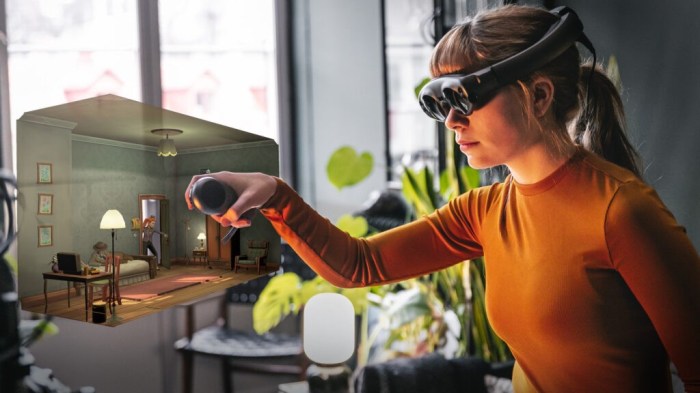
As we conclude our journey through the realm of Augmented Reality (AR) games, one thing is clear – the future of gaming is evolving rapidly with AR technology at the forefront. From popular titles like Pokemon Go to the educational benefits in business games, AR is here to stay and revolutionize how we play. Get ready to game on in a whole new dimension!
FAQ Overview
How does AR enhance the gaming experience?
AR enhances gaming by overlaying digital elements onto the real world, creating a more interactive and immersive gameplay experience.
What are some popular AR games besides Pokemon Go?
Other popular AR games include Ingress, Harry Potter: Wizards Unite, and Zombies, Run!
What is the difference between AR and VR games?
AR games overlay digital content onto the real world, while VR games immerse players in a completely virtual environment.


